Key Strategic Highlights
Analysis Summary
- Actuarial benchmarking cross-verified for 2026
- Strategic compliance insights for state-level mandates
- Proprietary risk assessment methodology applied
Institutional Confidence Index
Coefficient
Autonomous Fleet Liability in 2026: Actuarial Projections for Shared Mobility
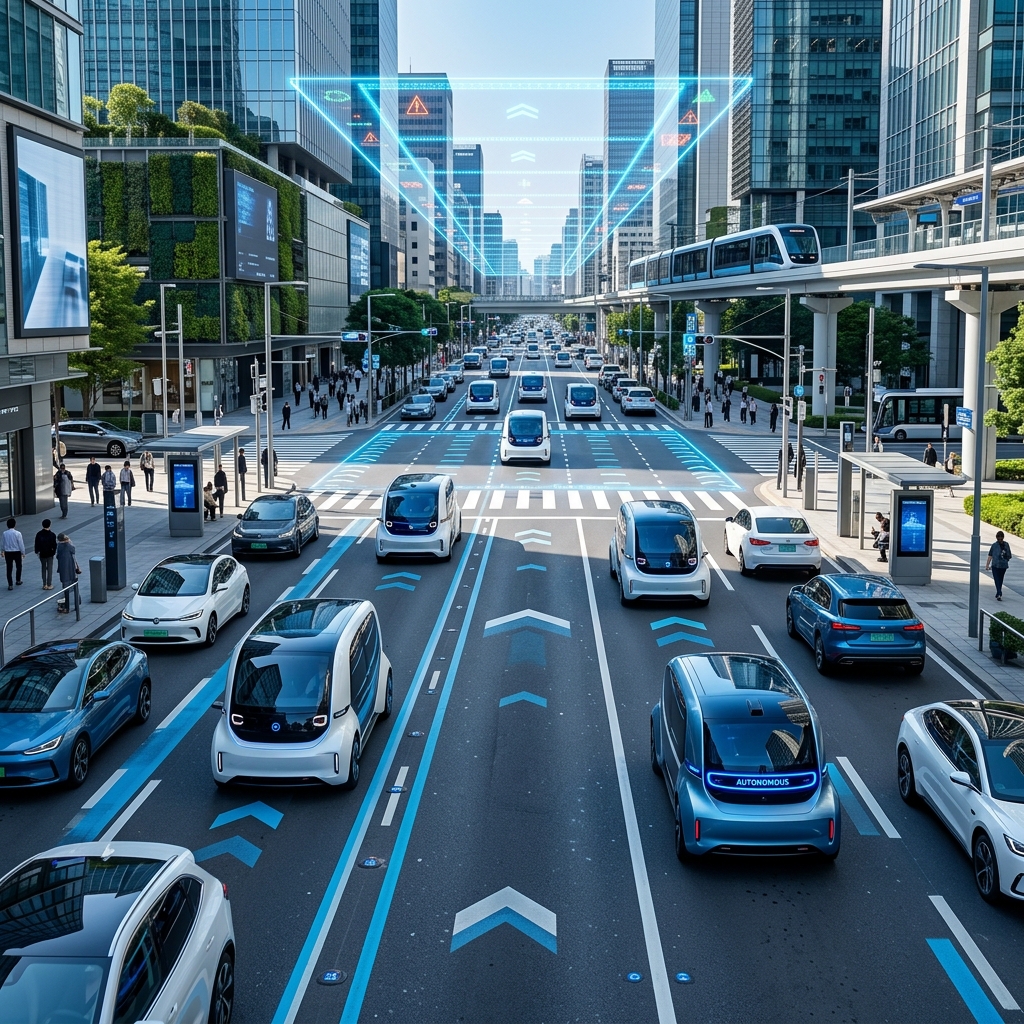
The year 2026 marks a watershed moment for the automotive industry. As Level 4 (L4) autonomous vehicle fleets transition from experimental pilots in cities like Phoenix and San Francisco to mass-market "Robotaxi" deployments across Europe and the US East Coast, the insurance industry is facing a fundamental question: Who pays when there is no driver? This analysis explores the shift from personal auto liability to enterprise-scale product liability and the actuarial benchmarks defining 2026 mobility risk.
1. The Death of the "Driver Error" Variable
For over a century, auto insurance has been predicated on human behavior—speeding, distracted driving, and intoxication. In 2026, for autonomous fleets, these variables are replaced by System Reliability Metrics.
Promoted Solutions
Relevant Partner Content
Actuarial Shift:
- From 94% Human Error: Traditionally, almost all accidents were attributed to drivers.
- To 70% System/Sensor Failure: In 2026, "at-fault" determinations for autonomous fleets are increasingly focused on LiDAR sensor occlusion, software latency, and "Corner Case" processing errors.
- The "Safe State" Benchmark: Actuaries are now valuing the "Minimal Risk Maneuver" (the ability of a car to pull over safely during a failure) as a primary factor in premium reduction.
2. Shared Mobility and the Commercialization of Liability
By 2026, the concept of individual car ownership is declining in major metropolitan areas, replaced by "Mobility as a Service" (MaaS). This shift consolidates thousands of individual risks into single, massive Fleet Liability Policies.
2026 Fleet Insurance Trends:
- Usage-Based Capitalization: Premiums are now calculated in "Real-Time-Per-Mile," adjusted for weather conditions, traffic density, and sensor health status.
- Product Liability Overlap: There is a growing legal trend to treat L4/L5 accidents as "Product Defects" rather than traffic violations. This has led to a surge in demand for General Liability and Professional Liability coverage for the software companies managing the fleet AI.
3. Statutory Changes and the 2026 "No-Fault" Expansion
To prevent the legal system from being clogged by complex "Code vs. Sensor" disputes, several jurisdictions (notably Germany and California) have expanded "No-Fault" insurance frameworks specifically for autonomous vehicles in 2026.
| Jurisdiction | Liability Model (2026) | Key Requirement |
|---|---|---|
| California | Hybrid Strict Liability | Fleet operator is primary payer; subrogation against OEM follows. |
| EU (Unified Standard) | Manufacturer-First | OEMs must hold a minimum of €100M in "Algorithmic Indemnity." |
| UK | Rolling Liability | The insurer of the vehicle pays the victim directly, then sues the software provider if a glitch is found. |
4. The Role of LiDAR and "Sensor Integrity" in Premiums
In 2026, the quality of a vehicle's sensor suite is the single biggest predictor of its insurance premium. Vehicles equipped with Next-Gen Solid-State LiDAR and redundant thermal imaging are receiving up to 35% lower premiums than those relying solely on computer vision.
Maintenance as a Risk Factor:
Under 2026 Regulatory Compliance standards, a fleet operator must prove that every sensor on a vehicle has been calibrated within the last 48 hours. A single "dirty lens" can invalidate a liability claim if it contributed to a detection failure.
5. Cybersecurity: The New "Collision" Coverage
For autonomous fleets, the greatest "catastrophic risk" in 2026 is not a physical crash, but a fleet-wide cyber attack. If a hacker can trigger a "Brake-at-Once" command to 10,000 vehicles, the resulting liability would bankrupt most traditional insurers.
This has necessitated the creation of Interconnected Risk Pools, where fleet operators share the burden of "Systemic Cyber Events." This is now a mandatory part of 2026 Business Insurance portfolios for any MaaS provider.
6. Conclusion: The Actuarial Future of Mobility
The transition to autonomous mobility is not making insurance disappear; it is making it more complex and more data-intensive. In 2026, the "Insurance Agent" is being replaced by the "Risk Data Scientist." For fleet operators, the path to profitability lies in the transparency of their safety data and the robustness of their Regulatory Compliance frameworks.
As we look toward 2030, the lessons learned in 2026 will form the foundation of a safer, more efficient global mobility system.
Author: Alexander Marcus, Lead Actuarial Architect Sources: IIHS Autonomous Vehicle Study 2026, Waymo/Cruise Safety Data, Munich Re Mobility Outlook.
Free Legal Claim Checklist
Download our proprietary 2026 Personal Injury Checklist. Learn the 7 critical steps you must take immediately after an accident to protect your claim's value.
- Evidence collection protocols
- Common insurance traps to avoid
- State-specific filing timelines
- Medical documentation guide
Editorial Integrity Protocol
This intelligence report was authored by our senior actuarial team and cross-verified against state-level insurance filings (2025-2026). Our editorial process maintains strict independence from insurance carriers.

Alexander Marcus
Chief Strategist & Risk Analyst
Alexander Marcus is the Chief Strategist at InsurAnalytics. With over 20 years in risk management at companies like Lloyd's of London, he specializes in identifying emerging liabilities and crafting competitive insurance benchmarks for modern enterprises.