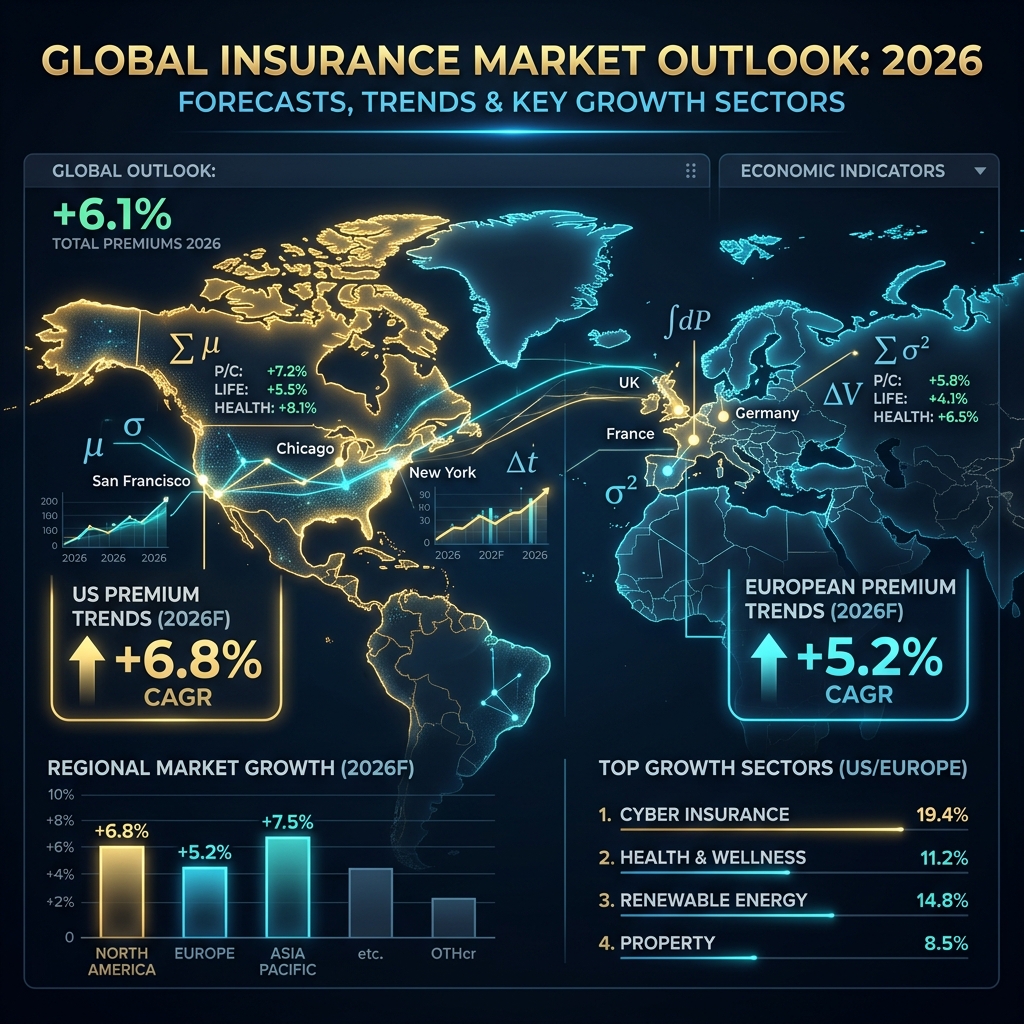
Key Strategic Highlights
Analysis Summary
- Actuarial benchmarking cross-verified for 2026
- Strategic compliance insights for state-level mandates
- Proprietary risk assessment methodology applied
Institutional Confidence Index
Coefficient
2026 General Liability: Navigating Climate Risk and the Catastrophic Surcharge Imperative
The 2026 general liability market marks a definitive paradigm shift, moving beyond the conceptualization of climate change as a distant, future problem. Following three consecutive years of unprecedented secondary peril losses—encompassing widespread inland flooding, devastating wildfires, and severe convective storms—insurers have fully integrated sophisticated climate metrics into their commercial premium structures. While a literal "climate surcharge" line item remains uncommon, the undeniable reality is that 2026 general liability premiums are now profoundly shaped by forward-looking "Diagnostic Underwriting" that meticulously prices in catastrophic risk at a granular, asset-specific, and even supply-chain level. This evolution demands a strategic re-evaluation of risk management and indemnity strategies for every enterprise.
1. The Demise of Historical Pricing in 2026 General Liability Underwriting
Promoted Solutions
Relevant Partner Content
In 2026, the insurance industry has largely, if not entirely, abandoned backward-looking historical claim data as the primary determinant for pricing general liability. This fundamental shift is driven by the recognition that past performance is no longer indicative of future risk in an era of accelerating climate volatility. Instead, leading carriers are leveraging advanced actuarial science and computational power to deploy Predictive Climate Twins—sophisticated digital models that simulate multi-decade climate scenarios for specific geographic coordinates, asset types, and operational footprints.
- Dynamic Risk Adjustment: Premiums are no longer static. They are now subject to annual, sometimes even semi-annual, adjustments based on dynamically shifting flood zones, evolving wildfire perimeters, and updated storm intensity projections. This leads to significant price volatility and necessitates continuous monitoring for businesses situated in high-exposure areas. The underwriting calculus now incorporates real-time geospatial data, satellite imagery, and IoT sensor data to refine risk assessments.
- Secondary Peril Pricing: Inland flooding, severe convective storms, and heatwaves, once considered minor or ancillary risks, have ascended to become major drivers of 2026 general liability costs. These perils, often localized but cumulatively devastating, contribute significantly to loss aggregation and necessitate a re-evaluation of traditional peril definitions and subrogation strategies. The focus has shifted from primary perils (e.g., hurricanes, earthquakes) to the more frequent and widespread secondary events that erode profitability and increase claims frequency.
- Stochastic Modeling and Portfolio Rebalancing: Insurers are employing advanced stochastic modeling techniques to forecast potential losses across their entire portfolio, factoring in various climate scenarios. This allows for proactive portfolio rebalancing, where exposure in high-risk sectors or geographies may be reduced, directly impacting the availability and cost of indemnity for businesses in those regions.
2. The "Resilience Premium" and Evolving Risk Surcharges
While a flat, explicit climate surcharge is largely avoided to prevent market friction, insurers are effectively penalizing "Climate-Inert" businesses through sophisticated pricing mechanisms. In 2026, a business that cannot demonstrably articulate and implement active climate resilience measures may face a substantial "Risk Quality Load" that can escalate premiums by 30-50% or more. This represents a significant shift from reactive claims management to proactive risk mitigation as a core underwriting criterion.
- Hardened Infrastructure and Proactive Mitigation: Firms that strategically invest in physical flood barriers, deploy fire-resistant materials, implement advanced water management systems, and ensure robust backup power solutions are increasingly seeing significant premium credits and more favorable policy terms. These investments are viewed as tangible reductions in the probability and severity of future losses, directly impacting the actuarial assessment of risk.
- Supply Chain Resilience and Extended Liability: The scope of general liability in 2026 now extends beyond direct physical damage to a firm’s inability to deliver services or products due to climate-induced disruptions within its supply chain. This forces a much closer, forensic examination of the climate-readiness and operational continuity plans of third-party vendors, logistics partners, and critical suppliers. Failure to ensure supply chain resilience can trigger business interruption claims and reputational damage, impacting the overall risk vector.
- Parametric Triggers and Alternative Risk Transfer: Businesses are increasingly exploring alternative risk transfer mechanisms, such as parametric insurance, where payouts are triggered by predefined climate events (e.g., specific wind speeds, rainfall totals) rather than actual losses. Catastrophe bonds and other capital market solutions are also gaining traction as sophisticated tools for managing extreme climate-related liabilities.
3. Climate Litigation and the Surge of "Social Inflation"
A major, and rapidly escalating, driver of 2026 general liability costs is the proliferation of climate-related litigation. We are witnessing a significant surge in "Failure to Warn" claims, where entities are sued for not adequately disclosing or mitigating climate risks, and "Greenwashing Liability" claims, targeting companies for misleading environmental claims. This legal landscape is reshaping the very definition of corporate responsibility.
- Nuclear Verdicts and Evolving Legal Theories: Aggressive legal theories are increasingly holding corporations responsible for climate-attributable damages, even when direct causation is complex. This has led to a rise in "nuclear verdicts"—settlements and jury awards exceeding $25 million—in various jurisdictions. These cases often hinge on demonstrating a company's knowledge of climate risks and its perceived inaction, creating a potent risk vector for general liability insurers.
- Director & Officer (D&O) Overlap and Fiduciary Duty: Climate disclosure failures and inadequate climate risk governance are increasingly triggering both General Liability and D&O claims. This creates complex "Dual-Tower" legal battles, where the fiduciary duty of directors and officers to manage material risks (including climate risk) is under intense scrutiny. The interplay between these policy types necessitates a holistic approach to corporate governance and risk transfer.
- Social Inflation and Public Perception: The concept of "social inflation"—the rising cost of insurance claims due to societal factors like increased litigation, larger jury awards, and changing public perceptions of corporate accountability—is heavily influenced by climate change. Public sentiment, fueled by media coverage of climate impacts, contributes to a more litigious environment and higher expectations for corporate responsibility, directly impacting indemnity costs.
4. The Indispensable Role of ESG in 2026 Underwriting Calculus
Environmental, Social, and Governance (ESG) metrics have transitioned from aspirational guidelines to standardized, quantifiable underwriting variables in 2026. Their integration is now a critical component of the underwriting calculus, influencing both premium rates and the availability of coverage.
- Carbon Intensity Linkage and Transition Risk: Some specialty carriers, particularly in sophisticated markets like London and New York, are beginning to explicitly link liability limits and premium structures to a firm's carbon transition plan and overall carbon intensity. Companies demonstrating a clear, actionable pathway to decarbonization are viewed as lower transition risks, potentially unlocking more favorable terms. This reflects the growing understanding of climate risk as both a physical and a transition risk, as defined by frameworks like the Task Force on Climate-related Financial Disclosures (TCFD).
- Statutory Mandates and Capital Adequacy: New 2026 regulations in certain states and international jurisdictions require insurers to disclose how climate risk is factored into their solvency models and capital adequacy assessments. This regulatory pressure indirectly but significantly influences the rates and capacity offered to the public, as insurers must demonstrate robust climate risk management to maintain regulatory compliance and financial stability (e.g., Solvency II principles).
- Reputational Risk and Stakeholder Pressure: Beyond direct financial metrics, a company's ESG performance, particularly its climate stewardship, profoundly impacts its reputational risk. Poor ESG scores can lead to stakeholder pressure, divestment, and increased scrutiny from regulators and activist investors, all of which can indirectly elevate general liability exposure.
5. Strategic Recommendations for Business Owners and Risk Managers
To mitigate the profound impact of the 2026 climate risk landscape on general liability and ensure long-term insurability, businesses must adopt a proactive, data-driven, and holistic approach to enterprise risk management.
- Conduct a Comprehensive Climate Risk Audit: Utilize forward-looking climate modeling and geospatial analytics to identify your facility's and critical assets' exposure to secondary perils (e.g., pluvial flooding, wildfire, extreme heat, wind events) over the next 10-20 years. This audit should extend to critical supply chain nodes and distribution networks. Engage specialized climate risk consultants to provide an independent assessment.
- Develop and Document a Robust Climate Defense Portfolio: Maintain a meticulously detailed "Climate Defense Portfolio" to present to underwriters. This portfolio should comprehensively highlight physical upgrades (e.g., flood barriers, elevated equipment, fire-resistant landscaping), operational resilience measures (e.g., diversified supply chains, redundant systems, climate-informed business continuity plans), and financial hedging strategies. Quantify the ROI of these investments where possible.
- Proactively Review and Optimize Policy Language: Engage with experienced insurance brokers and legal counsel to meticulously review your General Liability policy language. Pay particular attention to exclusions related to "Environmental Harm," "Pollution," or "Act of God" clauses, which could leave you exposed in a climate-related lawsuit. Seek endorsements or specialized coverage for emerging climate liabilities, including D&O and E&O overlaps.
- Integrate ESG into Enterprise Risk Management (ERM): Embed climate risk and broader ESG metrics into your overarching ERM framework. This includes setting clear climate-related KPIs, conducting regular scenario analyses, and ensuring board-level oversight of climate strategy. Demonstrating a mature ERM approach with a strong climate component will be a significant differentiator for underwriters.
- Engage in Proactive Dialogue with Insurers: Foster an open and transparent dialogue with your insurance partners. Share your climate risk assessments, resilience strategies, and long-term sustainability goals. Proactive engagement can lead to more tailored coverage, better pricing, and a stronger partnership in navigating this evolving risk landscape.
6. Conclusion: The Imperative for Climate-Informed Insurability in 2026
The 2026 general liability market unequivocally rewards the prepared and penalizes the complacent. The era of treating climate change as an external externality is over; it is now an intrinsic, quantifiable component of the underwriting equation. By understanding that climate risk is a permanent and evolving factor in the general liability calculus, businesses can take decisive, proactive steps to ensure not only their physical safety and operational continuity but also their financial insurability and long-term viability in an increasingly volatile and litigious world. Strategic investment in resilience and robust risk management is no longer an option but a core business imperative.
Author: Sarah Vance, Senior Regulatory Analyst & Climate Risk Strategist Sources: Swiss Re 2026 Sigma Report, Lloyds Climate Risk Briefing, 2026 International Panel on Climate Insurance (IPCI), IPCC Sixth Assessment Report, TCFD Recommendations.
2026 Strategic Risk Benchmarks
Join 25,000+ C-suite executives and risk managers. Receive weekly actuarial deep-dives, regulatory impact vectors, and proprietary liability benchmarks.
*By authorizing the feed, you agree to receive institutional risk intelligence. Unsubscribe at any time.
Free Legal Claim Checklist
Download our proprietary 2026 Personal Injury Checklist. Learn the 7 critical steps you must take immediately after an accident to protect your claim's value.
- Evidence collection protocols
- Common insurance traps to avoid
- State-specific filing timelines
- Medical documentation guide
Editorial Integrity Protocol
This intelligence report was authored by our senior actuarial team and cross-verified against state-level insurance filings (2025-2026). Our editorial process maintains strict independence from insurance carriers.

Alexander Marcus
Chief Strategist & Risk Analyst
Alexander Marcus is the Chief Strategist at InsurAnalytics. With over 20 years in risk management at companies like Lloyd's of London, he specializes in identifying emerging liabilities and crafting competitive insurance benchmarks for modern enterprises.